
Cosmetic
Composite bondingA conservative way to refine small imperfections
Tooth-coloured resin shaped directly onto the tooth to repair chips, close small gaps or improve the appearance of front teeth.
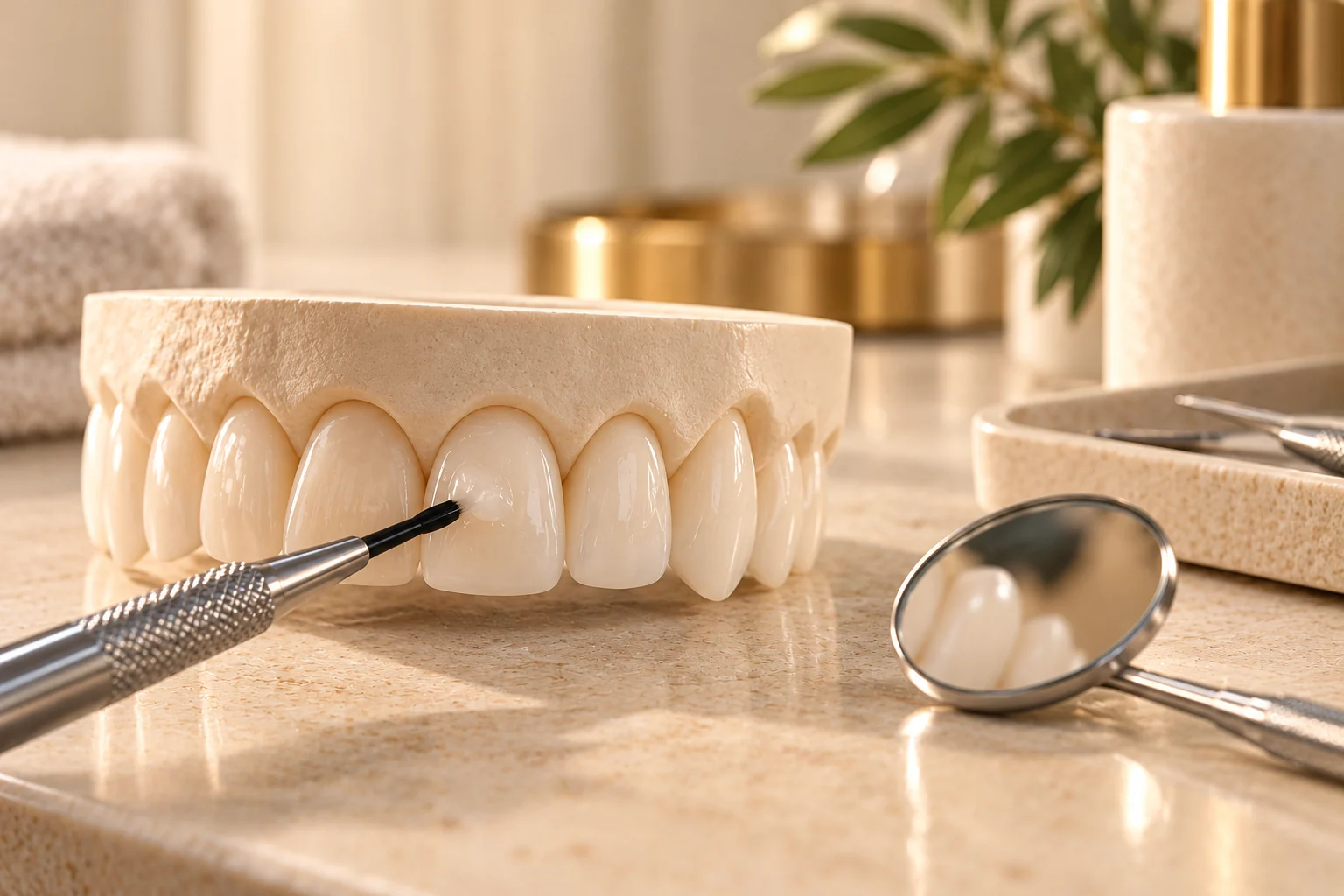
Illustrative image — not an actual patient result.
Composite bonding uses a tooth-coloured resin that is shaped and set directly on the tooth. It is often used for small chips, minor gaps, irregular edges or slight changes in shape.
Bonding is usually completed in a single appointment and requires little or no removal of healthy tooth structure, which makes it a conservative option. It is not as strong or as stain-resistant as ceramic, and it may need refreshing over time.
The result depends on the skill and judgement of the clinician as well as the condition of the tooth. We will explain what bonding can realistically achieve for you before starting.
Documented case
Restoring Six Front Teeth with Composite Bonding
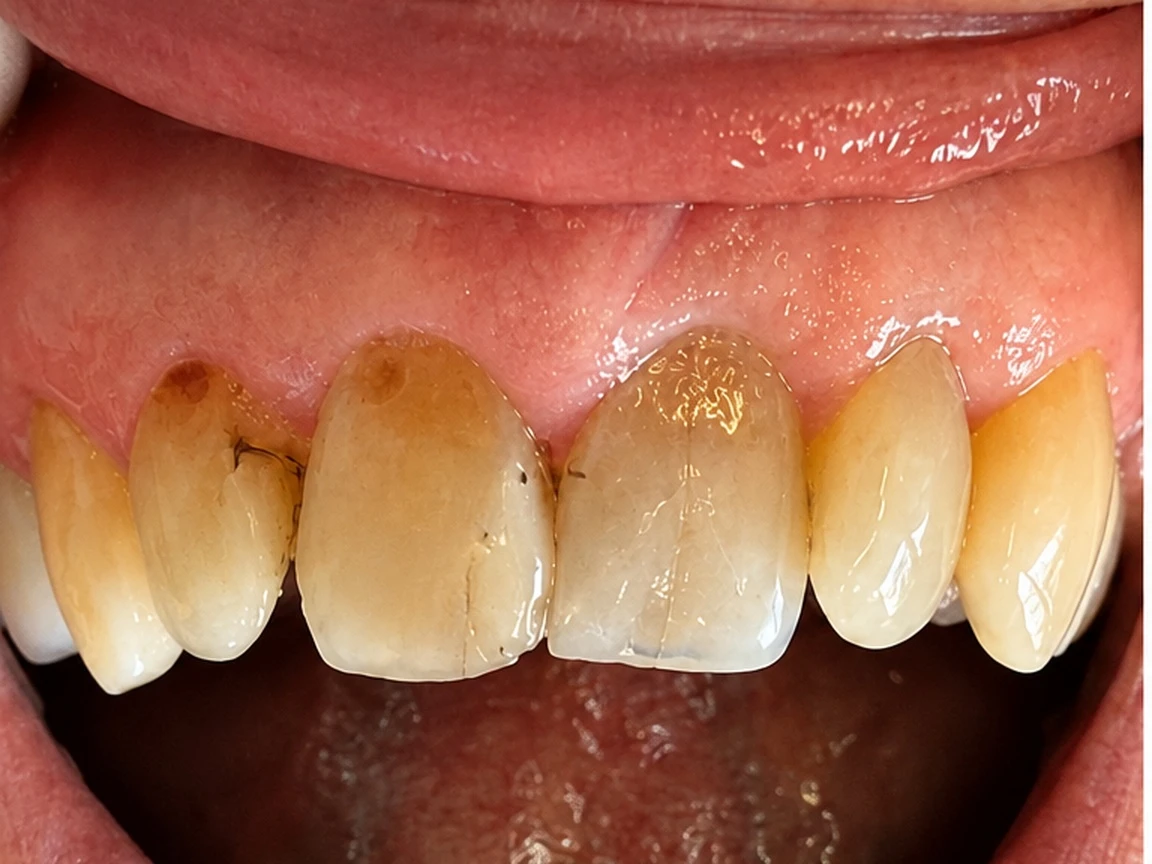
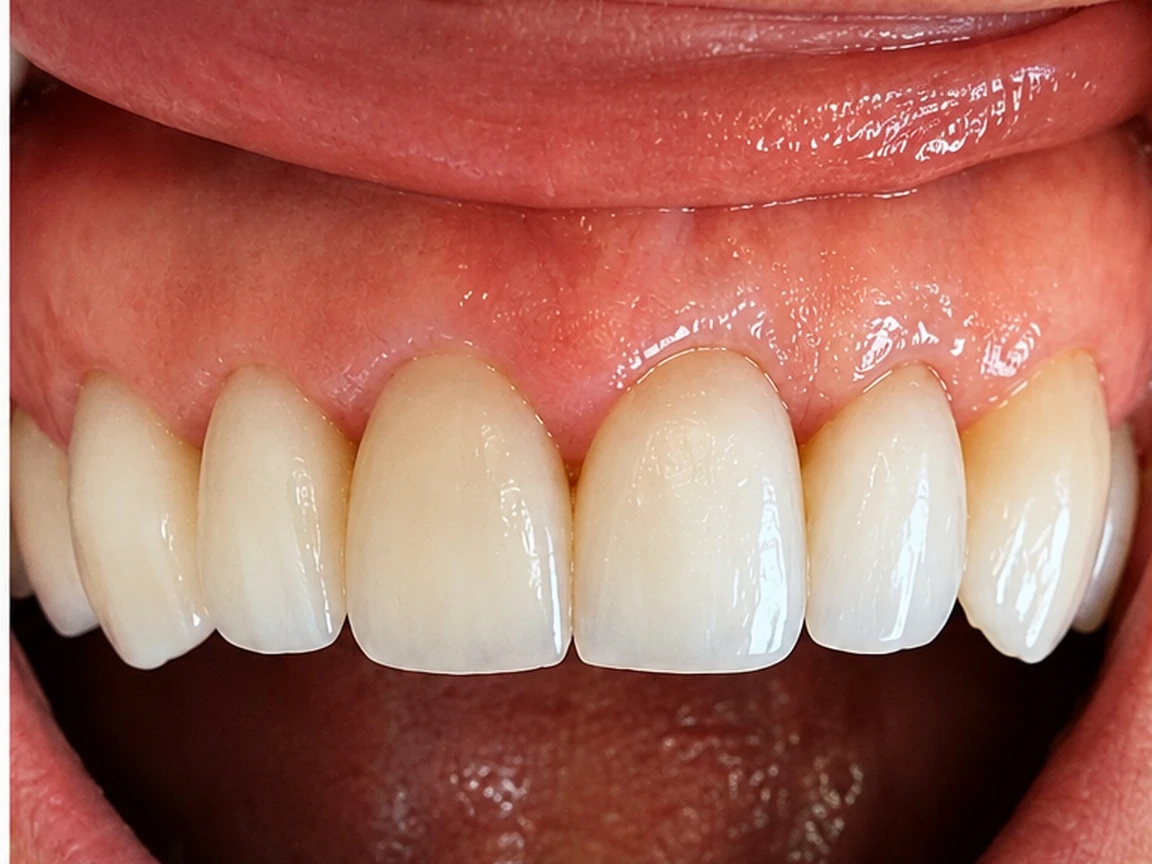
This case demonstrates how carefully placed composite restorations can improve the appearance of the upper front teeth while preserving a natural-looking smile.
Composite material was individually shaped and refined across six anterior teeth to improve their contours, proportions and overall harmony.
The treatment was designed to achieve a balanced result while maintaining the patient’s natural dental characteristics.
Individual treatment outcomes may vary.
Documented case
Composite Bonding – Two Front Teeth
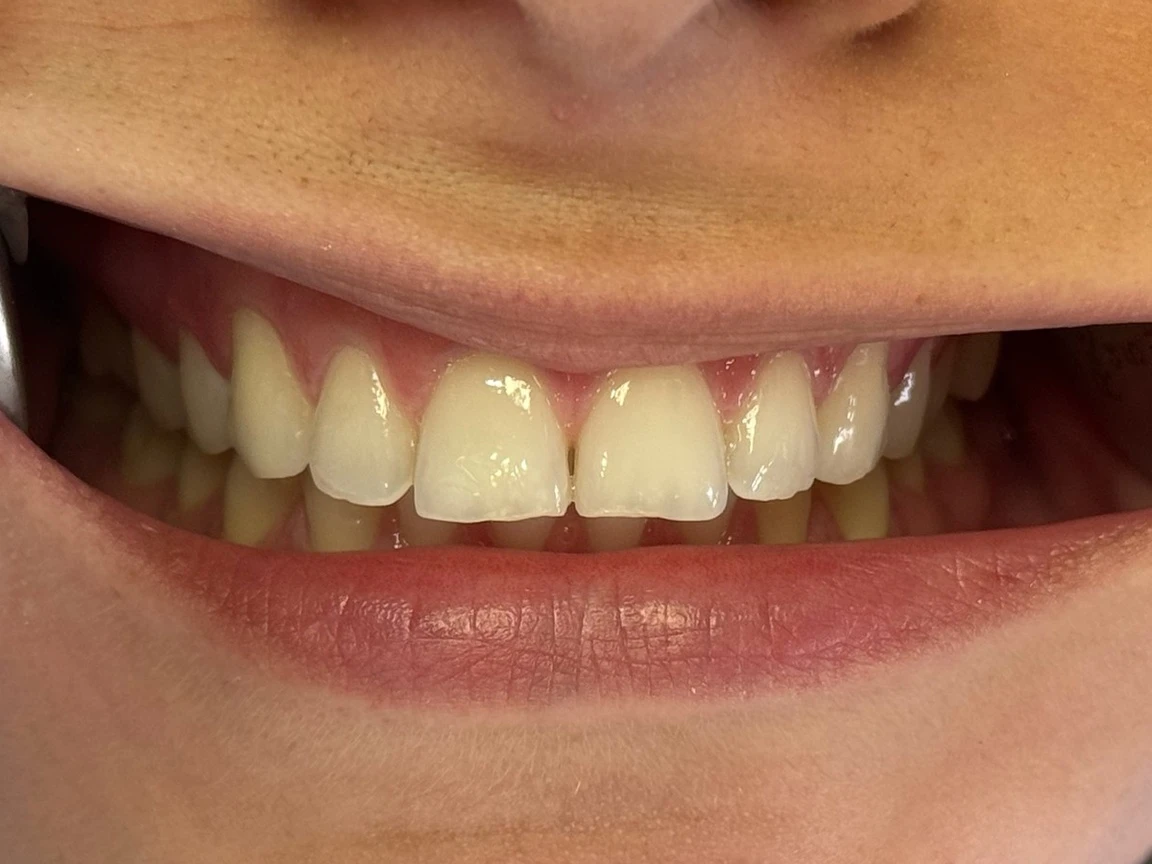
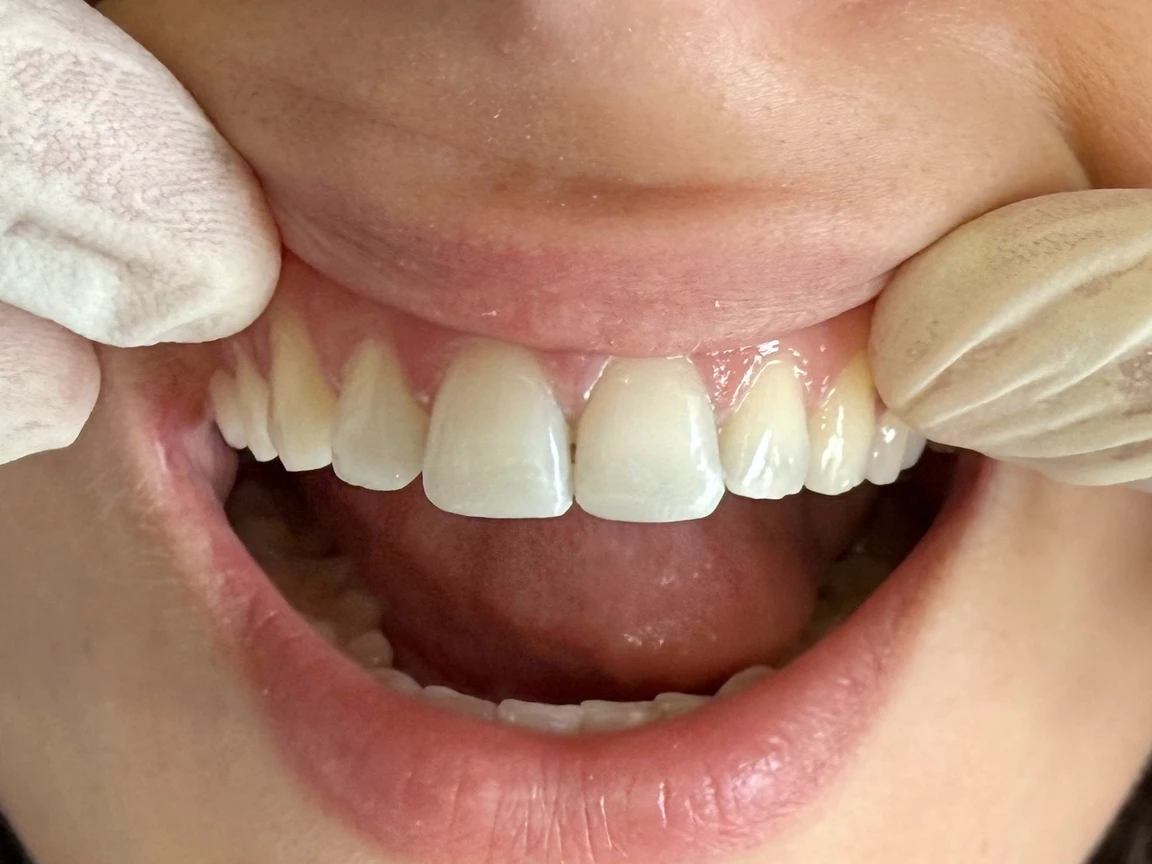
This patient received composite bonding on the two upper central incisors to improve their shape, symmetry and visual alignment, creating a straighter-looking and more harmonious smile.
Individual treatment outcomes may vary.
Documented case
Composite bonding: smile enhancement
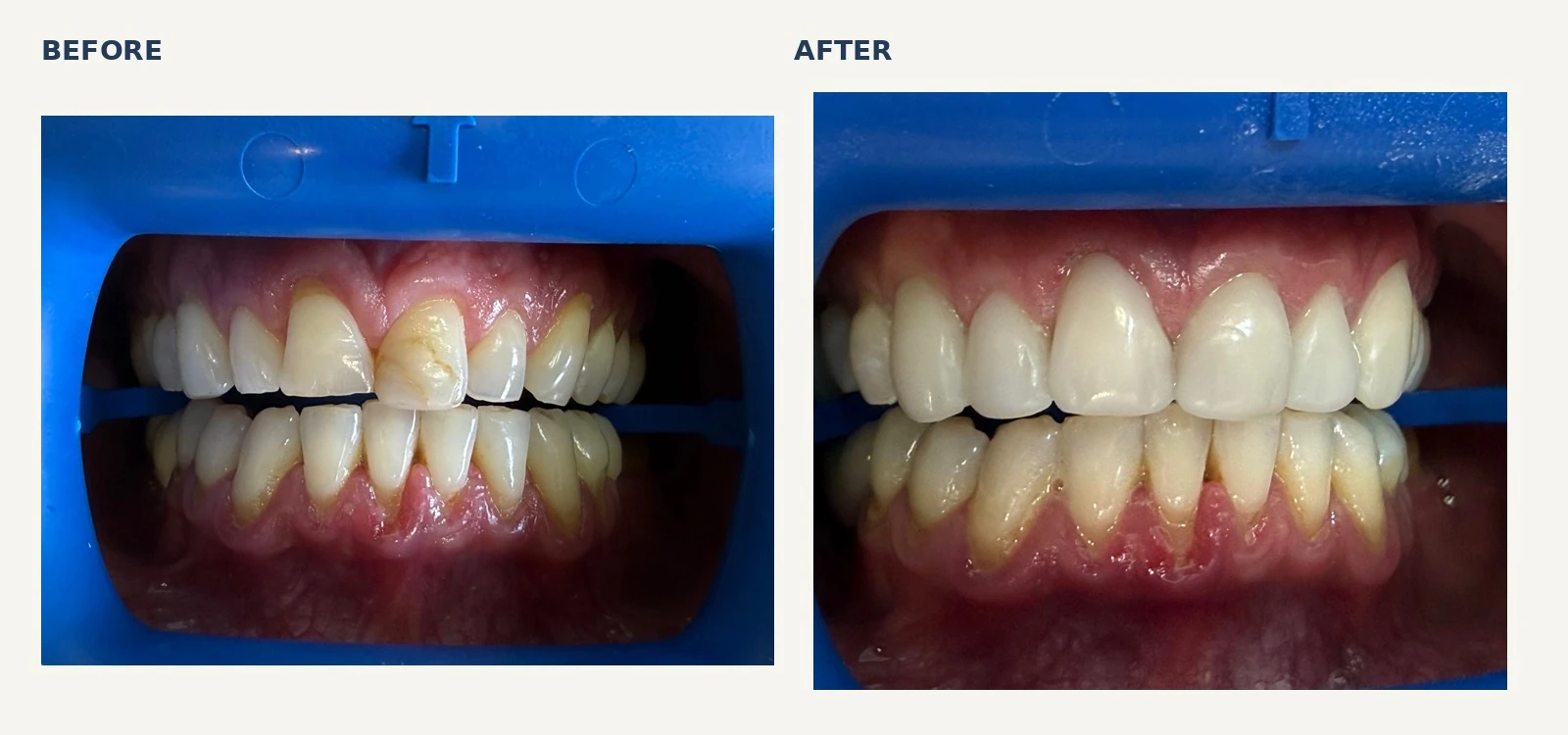
A natural-looking smile enhancement using composite bonding to improve the shape, proportions and overall appearance of the upper front teeth.
A personalised approach to achieving a balanced, harmonious smile while preserving natural tooth structure where possible.
Individual results may vary.
What treatment involves
- Assessment of the tooth, bite and gum health
- Shade selection and, where helpful, a discussion of the proposed shape
- Careful preparation and isolation of the tooth
- Application and shaping of the composite, set with a curing light
- Finishing, polishing and checking the bite
Who it may suit
- Small chips, worn edges or minor irregularities
- Closing small gaps between otherwise healthy teeth
- Patients who prefer a minimally invasive option
- Temporary improvement before a longer-term plan
This is general guidance only. Suitability is confirmed after a clinical examination and a discussion of your individual circumstances.
After treatment
- Composite can stain, so consider limiting coffee, tea, red wine and smoking
- Avoid biting hard objects with the bonded edge
- Attend reviews so the margins and polish can be checked
- Refreshing or repairing the bonding may be needed over time
Good to know
Composite bonding is not suitable for every case, and larger changes may be better addressed with other treatments. This is discussed at consultation.
The information on this page is general and does not replace individual clinical advice. No treatment outcome can be guaranteed. If you have symptoms or concerns, please contact the clinic so we can assess you properly.
Continue exploring