Restorative
Dental implantsA stable foundation for replacing missing teeth
Titanium roots placed in the jaw to support a crown, bridge or denture, planned around your bone, bite and long-term oral health.
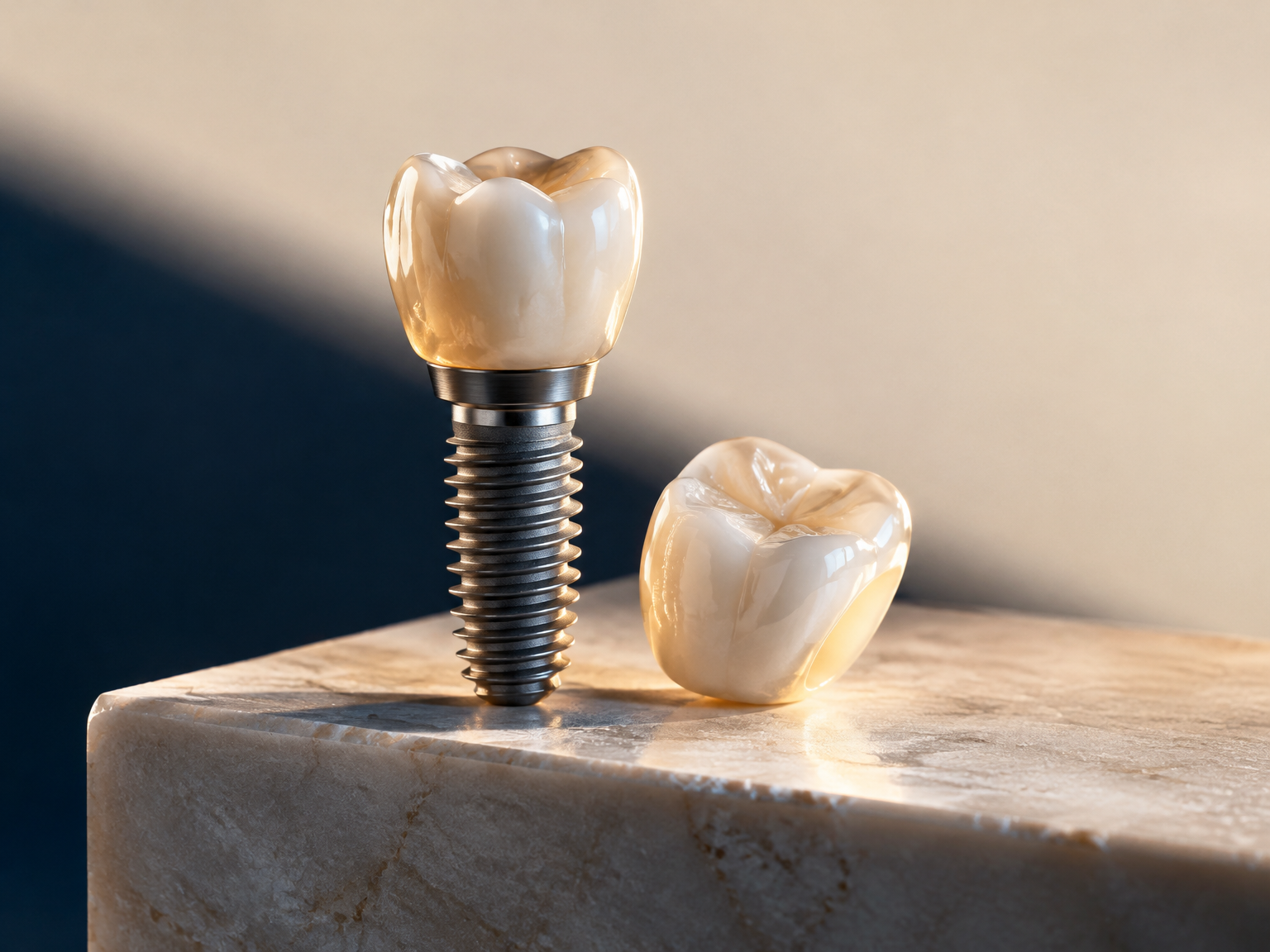
Illustrative image — not an actual patient result.
A dental implant is a small titanium post placed in the jawbone to act as an artificial root. Once the surrounding bone has settled around it, the implant can support a single crown, part of a bridge or a removable denture.
Implant treatment is planned rather than rushed. Before any surgery we assess your general health, gum condition, bone volume and bite, and we discuss the alternatives, including doing nothing, so you can make an informed decision.
Not every missing tooth needs an implant, and not every patient is suitable. Suitability can only be confirmed after a clinical examination and appropriate imaging.
Documented case
Full upper-jaw rehabilitation – six dental implants with a fixed denture
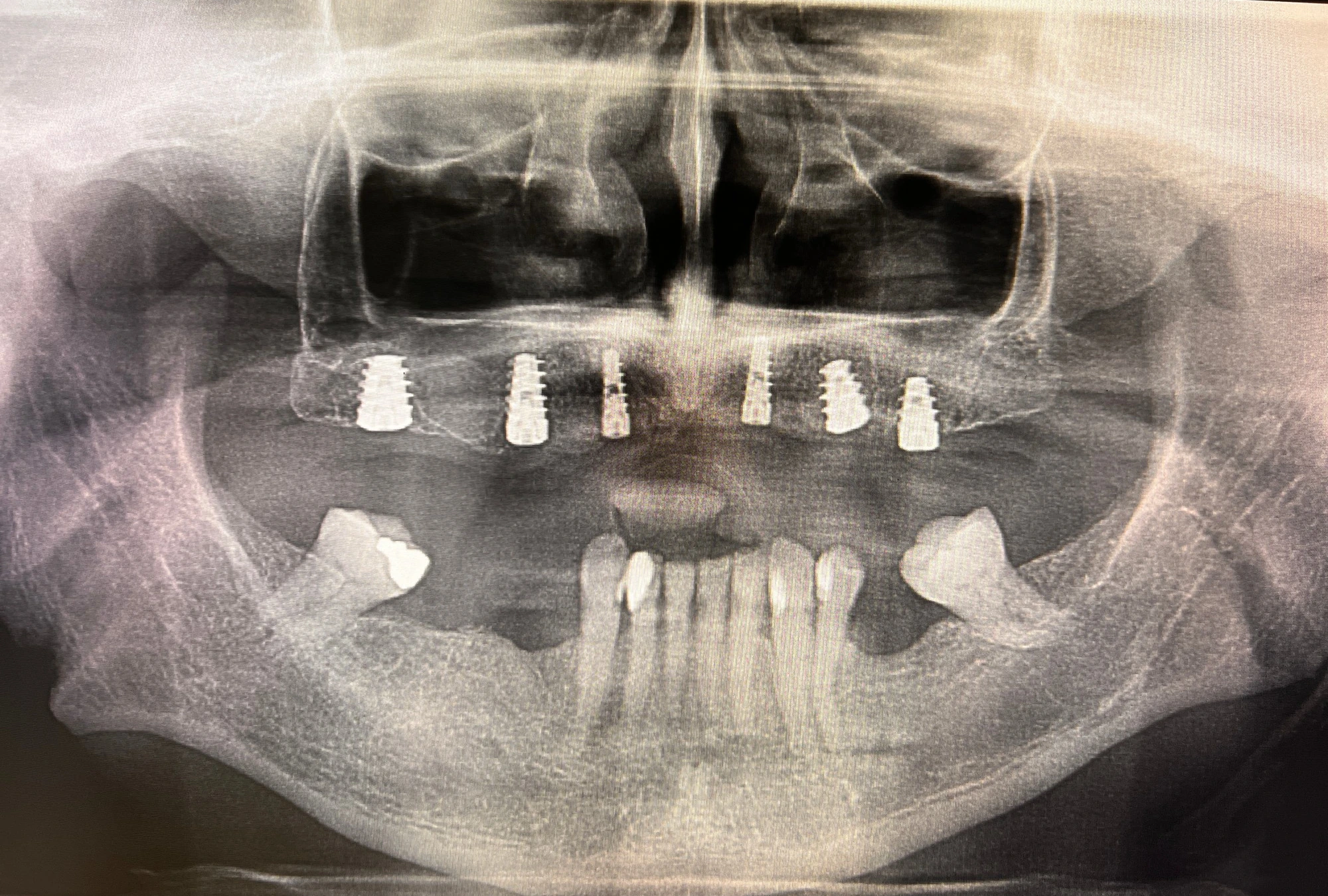
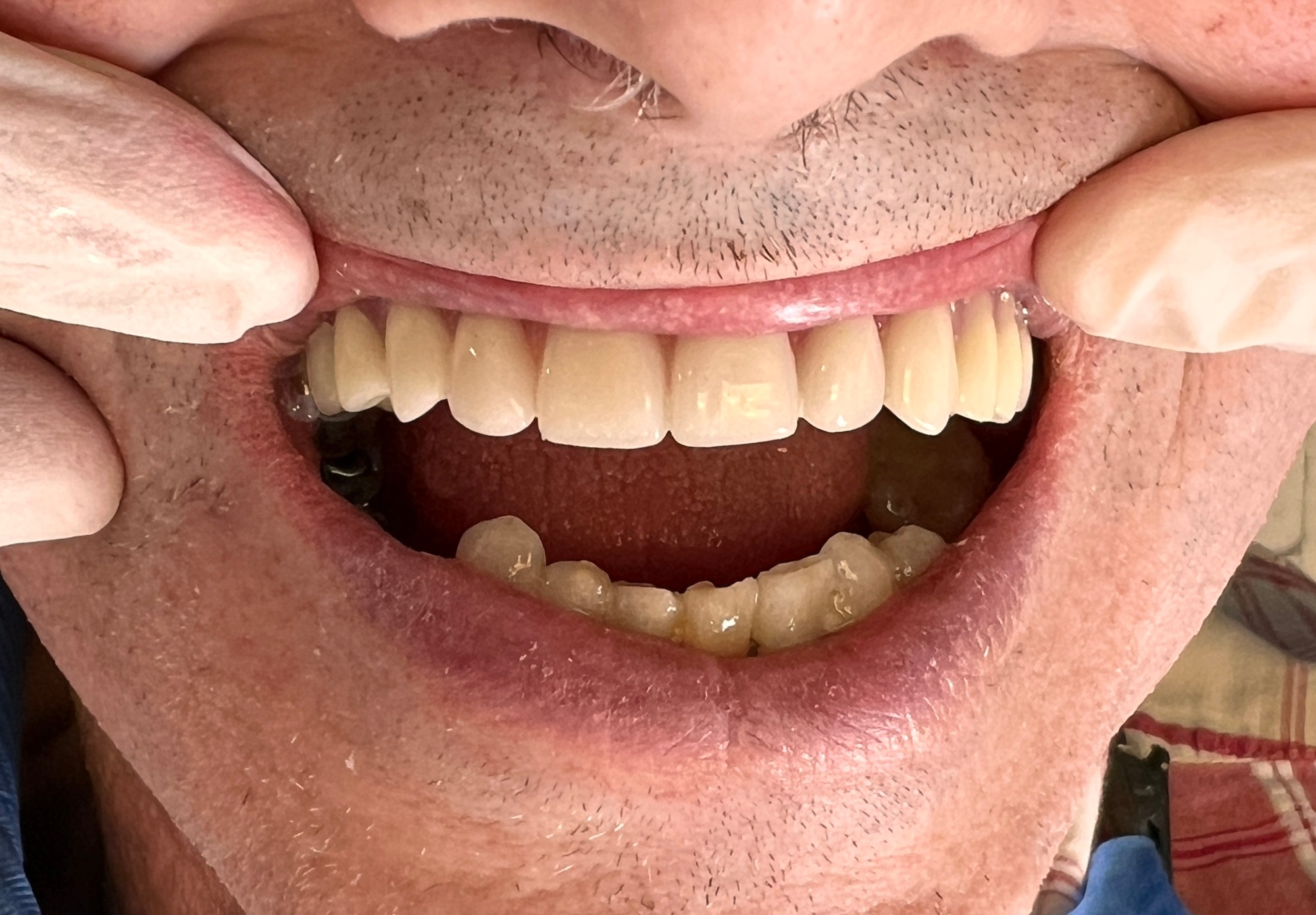
This patient underwent full upper-jaw rehabilitation using six dental implants to support a fixed implant-supported denture. The panoramic radiograph shows the six implants placed across the upper jaw.
The completed restoration is shown in the photograph and the short video below, filmed in the clinic so the shape, shade and fit of the fixed denture can be seen in more detail.
Individual treatment outcomes may vary.
Completed restoration: the fixed upper implant-supported denture in place, filmed in the clinic.
Documented case
Lower implant-supported bar-retained overdenture – four dental implants
Four dental implants were placed in the lower jaw to support a custom-made metal bar. A specially designed removable overdenture clips onto the bar, which gives a more stable and secure attachment than a conventional removable denture and helps reduce unwanted movement during speaking and eating.
Four dental implants support a precision-made bar. A specially designed denture clips securely onto this bar, providing improved stability, comfort and confidence while remaining removable for cleaning.
The overdenture can still be removed for cleaning and maintenance. The videos show the bar in place and the completed overdenture in the mouth; they do not show the denture being clipped into place.
Individual treatment outcomes may vary.
Implant-supported bar attachment
The custom-made metal bar supported by four lower implants, shown with the overdenture removed.
The completed lower overdenture in place, checked in the clinic.
What treatment involves
- A consultation, clinical photographs and imaging to assess bone and surrounding teeth
- A written treatment plan covering stages, appointments and the associated costs
- Placement of the implant under local anaesthetic, with sedation discussed where appropriate
- A healing period while the bone integrates with the implant
- Fitting of the final crown, bridge or denture once healing is confirmed
Who it may suit
- Adults with one or more missing teeth and adequate bone volume, or where grafting is possible
- People who prefer not to have a removable partial denture
- Patients able to maintain good oral hygiene and attend review appointments
- Non-smokers, or smokers who understand the higher risk of complications
This is general guidance only. Suitability is confirmed after a clinical examination and a discussion of your individual circumstances.
After treatment
- Expect some tenderness and swelling for a few days; we give specific aftercare instructions in writing
- Keep the area clean and follow the cleaning advice for the healing site
- Attend review appointments so healing and the final restoration can be checked
- Long-term success depends on hygiene, regular maintenance and not smoking
Good to know
Implant treatment is a surgical procedure. Risks include infection, bleeding, nerve injury and failure to integrate, and these are discussed individually before consent.
The information on this page is general and does not replace individual clinical advice. No treatment outcome can be guaranteed. If you have symptoms or concerns, please contact the clinic so we can assess you properly.
Continue exploring