
Oral surgery
Extractions and surgical extractionsRemoving a tooth when it cannot be saved
Careful removal of teeth that are unrestorable or causing problems, with surgical options for complex cases.
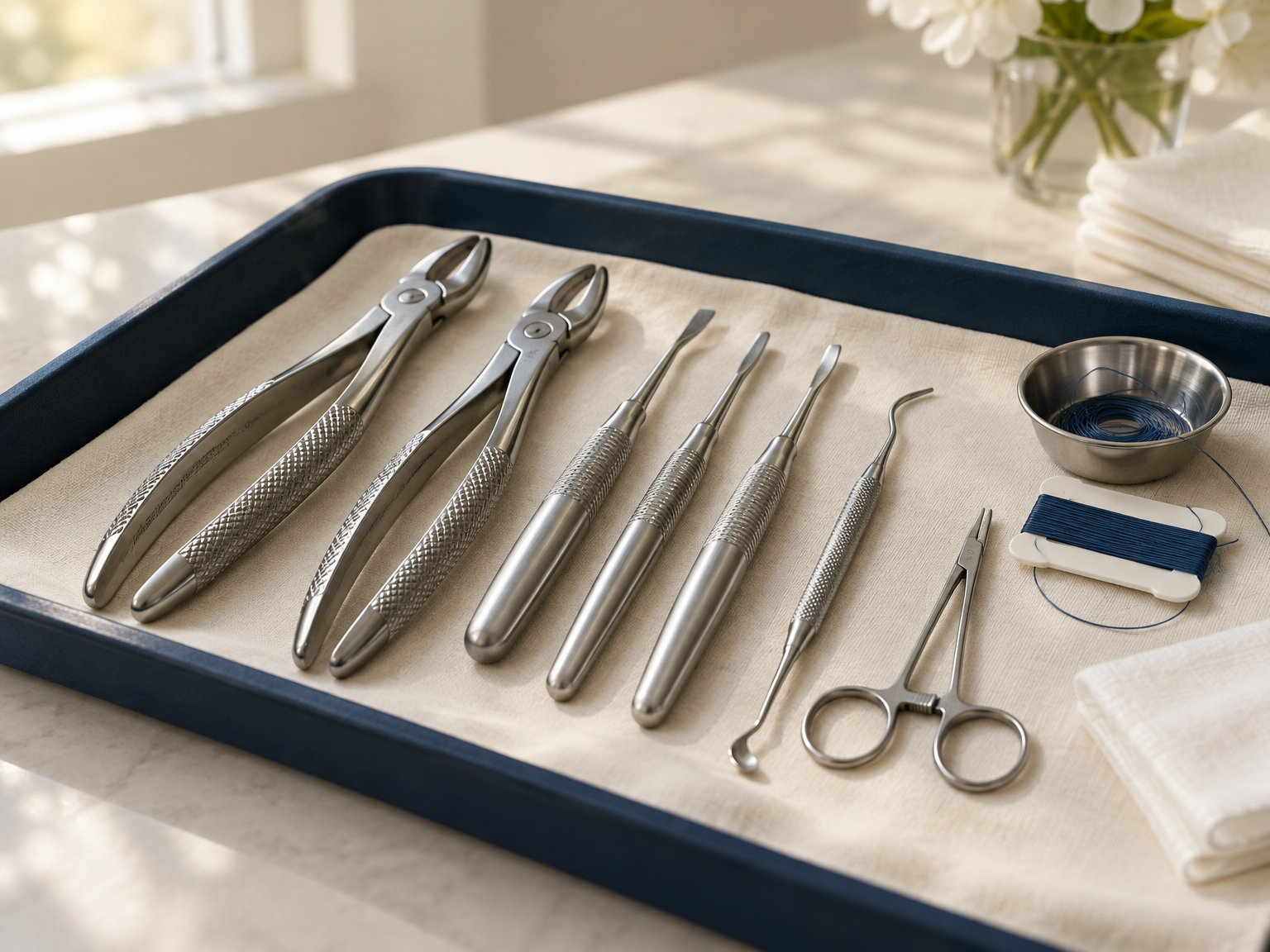
Illustrative image — not an actual patient result.
Extraction is considered when a tooth cannot be repaired, is causing infection or damage, or needs to be removed as part of a wider plan. Keeping a tooth is usually preferable where it can be done predictably, so the decision is made after assessment.
Some teeth can be removed with a straightforward extraction. Others need a surgical approach, for example when a tooth is broken, impacted or has roots that are curved or close to important structures. Both are carried out under local anaesthetic.
We will explain the alternatives, the risks and what replacement options may be available afterwards. If you are anxious, tell us: there are ways to make the appointment more comfortable.
What treatment involves
- Examination and radiographs to assess the tooth and nearby structures
- A discussion of the reason for extraction and the alternatives
- Local anaesthetic, with the area checked before treatment begins
- Removal of the tooth, with sutures where needed for a surgical extraction
- Written aftercare instructions and a review where appropriate
Who it may suit
- Teeth that are unrestorable due to decay, fracture or root damage
- Advanced gum disease where the tooth is mobile
- Impacted or problem wisdom teeth, after assessment
- Teeth requiring removal as part of orthodontic or prosthetic planning
This is general guidance only. Suitability is confirmed after a clinical examination and a discussion of your individual circumstances.
After treatment
- Bite gently on the gauze provided and avoid rinsing for the first 24 hours
- Avoid smoking, alcohol and strenuous exercise while the site heals
- Eat soft food and keep the area clean as instructed
- Contact the clinic if bleeding continues, or if pain or swelling worsens
Good to know
Every surgical procedure carries risks, including bleeding, infection, bruising, dry socket and, rarely, nerve injury. These are discussed before you consent.
The information on this page is general and does not replace individual clinical advice. No treatment outcome can be guaranteed. If you have symptoms or concerns, please contact the clinic so we can assess you properly.
Continue exploring