
General & preventive
Professional hygieneMaintaining healthy gums and fresh breath
Professional cleaning and gum assessment to remove plaque and calculus, with practical advice tailored to your mouth.
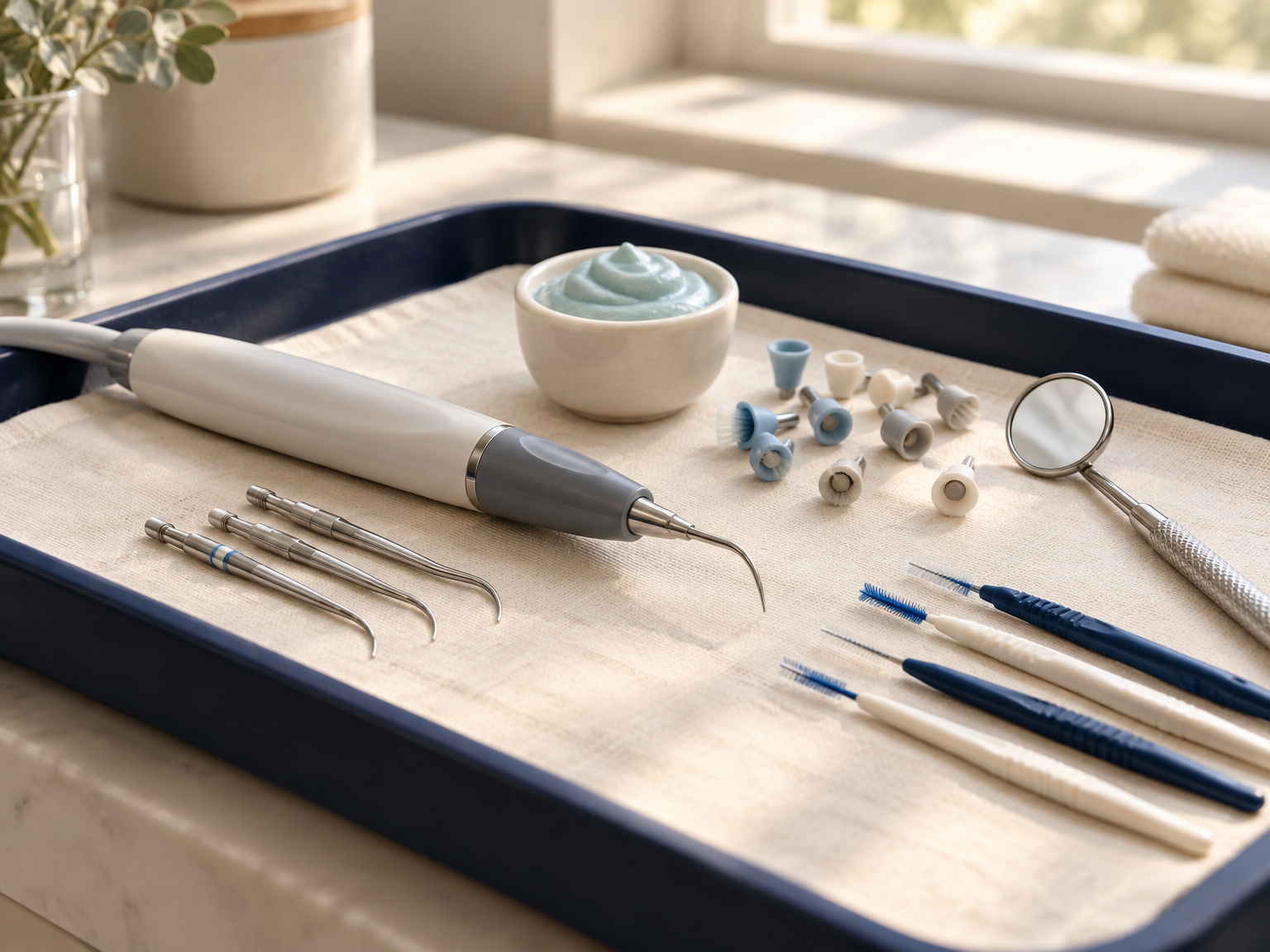
Illustrative image — not an actual patient result.
Professional hygiene removes plaque and hardened calculus from areas that a toothbrush cannot reach. It is one of the most effective ways to keep gums healthy and to help prevent tooth loss.
Every hygiene appointment includes an assessment of your gums, existing restorations and cleaning technique. Advice is practical and specific to your mouth rather than a generic leaflet.
The interval between appointments varies. Some patients benefit from more frequent care, particularly where there is a history of gum disease, smoking or complex restorations.
What treatment involves
- Gum assessment, including measurement of pocket depths where indicated
- Removal of calculus and plaque above and, where appropriate, below the gum line
- Polishing and, where suitable, air polishing for staining
- A review of your home cleaning routine and any aids we recommend
- A written recommendation for your next review interval
Who it may suit
- Everyone, as part of routine preventive care
- Patients with bleeding gums, calculus build-up or persistent bad breath
- People with crowns, bridges, implants or orthodontic appliances
- Smokers and patients with a history of gum disease
This is general guidance only. Suitability is confirmed after a clinical examination and a discussion of your individual circumstances.
After treatment
- Some sensitivity or slight gum tenderness can occur for a day or two
- Use the cleaning aids demonstrated at your appointment
- Keep to the review interval agreed with your clinician
- Report any bleeding, swelling or discomfort that persists
Good to know
Hygiene appointments complement, rather than replace, daily cleaning at home. Gum disease may require further periodontal assessment.
The information on this page is general and does not replace individual clinical advice. No treatment outcome can be guaranteed. If you have symptoms or concerns, please contact the clinic so we can assess you properly.
Continue exploring