
General & preventive
Root canal treatmentTreating infection inside the tooth
Careful cleaning and sealing of the root canal system when the nerve of a tooth becomes infected or inflamed.
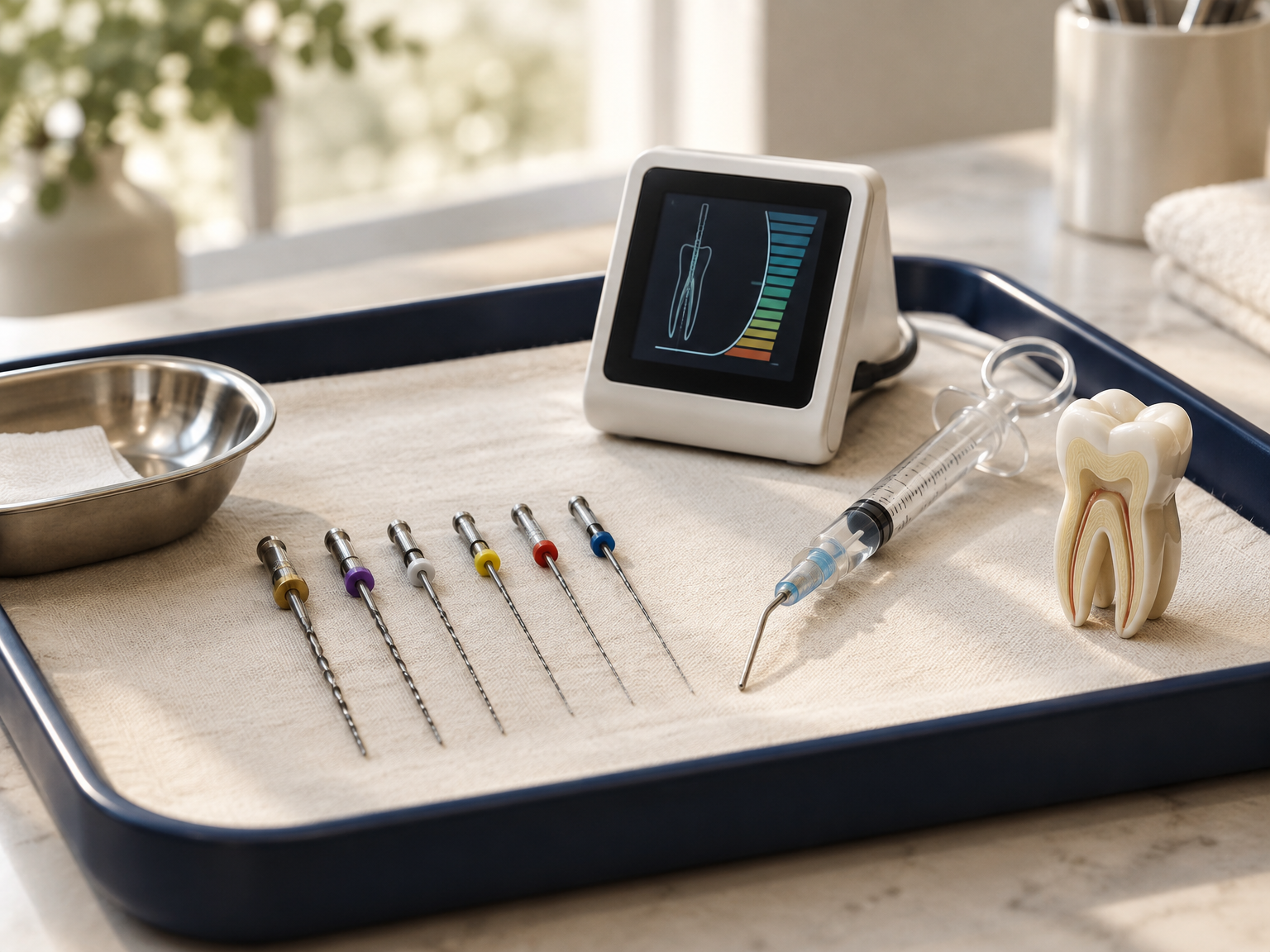
Illustrative image — not an actual patient result.
Root canal treatment is needed when the tissue inside a tooth becomes infected or inflamed, often because of deep decay, a fracture or previous trauma. Without treatment, the infection can spread and the tooth may be lost.
The procedure removes the damaged tissue, cleans and disinfects the canal system, then seals it. It is usually carried out under local anaesthetic and can take more than one appointment.
Root-treated teeth are often weaker and may need a crown or onlay afterwards. We will discuss whether the tooth is likely to be a good long-term investment or whether extraction is more appropriate.
What treatment involves
- Diagnosis with examination and radiographs
- Local anaesthetic and isolation of the tooth
- Removal of the inflamed or infected tissue and cleaning of the canals
- Filling and sealing the canal system
- Restoring the tooth, often with a crown or onlay
Who it may suit
- Teeth with irreversible inflammation or infection of the pulp
- Teeth that can still be restored and are supported by healthy bone
- Patients who wish to keep a tooth that would otherwise need extraction
- Cases where the canal anatomy can be negotiated and treated
This is general guidance only. Suitability is confirmed after a clinical examination and a discussion of your individual circumstances.
After treatment
- The tooth may feel tender for a few days after each appointment
- Avoid chewing hard food on the tooth until the final restoration is in place
- Take any medication exactly as advised
- Contact the clinic if swelling, severe pain or a reaction occurs
Good to know
Root canal treatment is not always successful, and retreatment or extraction may be needed. Success depends on the condition of the tooth and the surrounding tissues.
The information on this page is general and does not replace individual clinical advice. No treatment outcome can be guaranteed. If you have symptoms or concerns, please contact the clinic so we can assess you properly.
Continue exploring